In July 2026, three Earth Fire Alliance satellites launched aboard SpaceX’s Transporter-17 rideshare mission. These satellites, built for Earth Fire Alliance by its partner Muon Space, represent the Initial Operational Capability of FireSat, an advanced, purpose-built low-Earth-orbit satellite constellation for detecting, monitoring, and characterizing fire activity at fine-scale resolution.
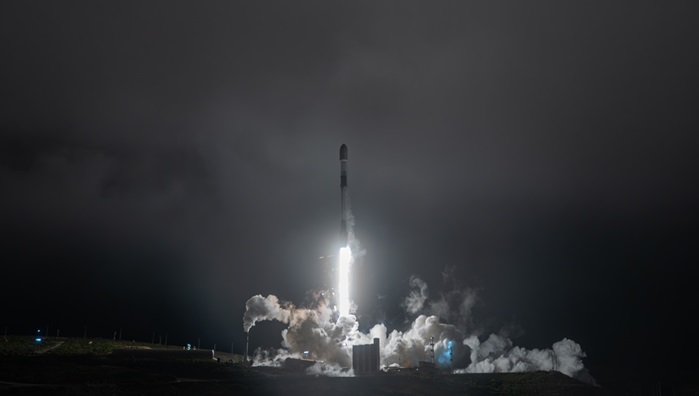
Image: SpaceX Falcon 9 Transporter-17 launch from Vandenberg Space Force Base.
Inspired by a species of bird that has evolved alongside fire, this mission was named Black Kite Trio (BK-3) to reflect Earth Fire Alliance’s vision of helping people, ecosystems, and communities confidently coexist with fire — and will help tell a story about living on planet Earth with fire: learning from it, adapting to it, harnessing it, and building resilience around it.
At full operational capability, FireSat is designed to provide fire updates every 20 minutes across 99% of Earth’s terrestrial surface, while also generating deeper datasets for fire research and long-term ecosystem management. The data this system will capture will enable improved early fire detection, allowing responders to identify ignitions while they are still small. Additionally, more and globally consistent data before, during, and after fires will help scientists and land managers understand how landscapes can be readied for fire, how fire moves through landscapes, how ecosystems respond, and where ecologically beneficial fire can support resilience.
Since 2021, through more than $13 million in committed support for FireSat, the Moore Foundation has played a catalytic role in advancing a new generation of Earth observation and fire technology. This support has helped move FireSat from concept to implementation, while also encouraging other donors to invest in fire detection, planning, and resilience.
Meeting a growing need for responsible fire technology
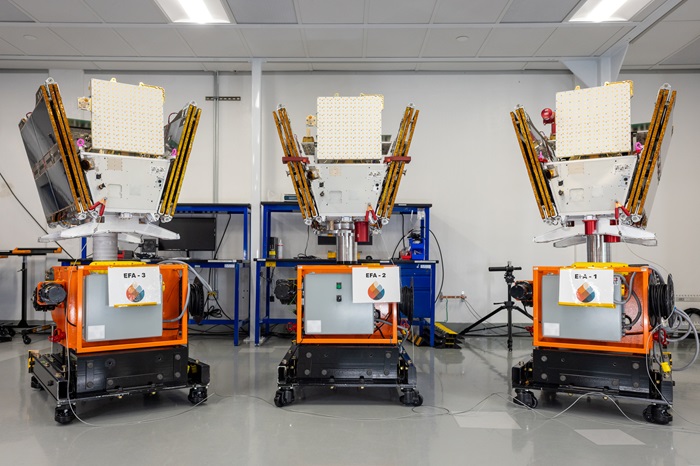
Image: Three Earth Fire Alliance FireSat satellites. Courtesy of Muon Space.
Fire technology is gaining momentum as public agencies, researchers, philanthropies, and communities work to scale innovations for wildfire resilience and adaptation. But the field also faces persistent challenges. The State of FireTech 2025 report illustrates that building new technologies is not enough. Testing, validation, and determining which tools are useful, usable, and scalable in real-world conditions is critical.
Organizations like the newly formed FireWERX will help ensure that novel solutions are co-developed with intended agency end-users, so that technologies are fit for purpose and designed for the those who will deploy and rely on them on the frontlines.
Data for better decisions
Later this year, FireSat Early Adopter program participants will receive the first operational data from the system. This data is expected to contribute to better fire intelligence and close a critical information gap across the fire cycle, including early detection and suppression.
Fire technology is not only about emergency response. It is about understanding landscapes before, during, and after fire so land stewards can make the most informed decisions. It can also help align public safety and ecological health for resilience. That’s why the Western Fire & Forest Resilience Collaborative is an early adopter for FireSat, too.
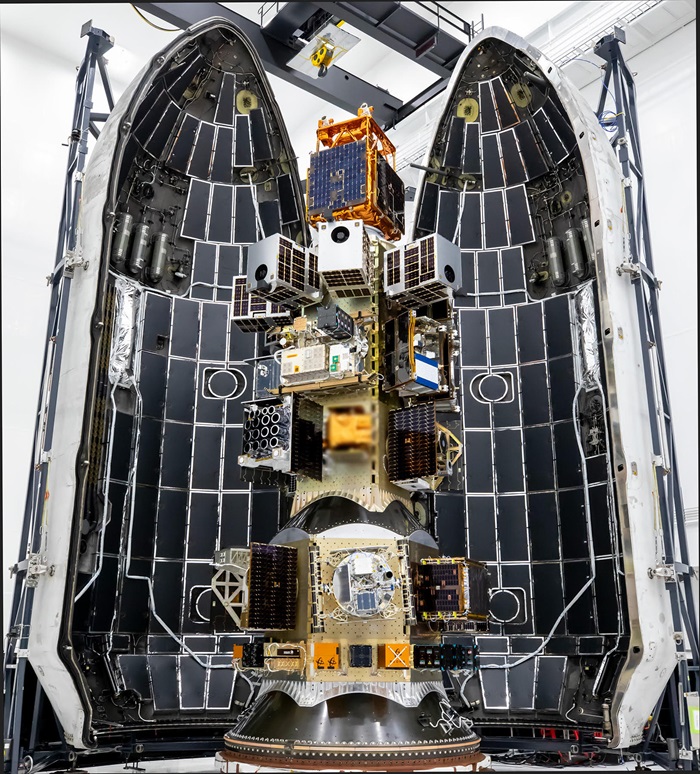
Image: Three FireSat satellites aboard the SpaceX Falcon 9 Transporter-17. Courtesy of Muon Space.
Importantly, the data from FireSat will be available through Earth Fire Alliance, a nonprofit created to provide accessible fire data for the public good. Fire intelligence should be free at the point of access to the people and institutions who need it most. For firefighters, these data will be crucial to helping them identify blazes early and responding more quickly, safely, and effectively. The data will also be an important resource for upstream, pre-fire planning and prioritization for fire agencies, scientists, land managers, Indigenous communities, and local governments.
This kind of access is essential as the firetech field matures. A more resilient future will require tools that can work across jurisdictions, support trusted decision-making, and meet the needs of different users. FireSat can help provide a shared source of timely, consistent fire information, strengthening collaboration for more coordinated action.
Leveraging technology for a more resilient future
For the Moore Foundation, support for FireSat is part of a larger bet on the role of innovation and technology in solving complex environmental challenges. By investing early, the foundation has helped reduce risk, accelerate momentum, and invite additional partners into the field.
That catalytic role matters because wildfire resilience requires more than isolated innovation. It requires a stronger ecosystem of funders and supporters working together, across sectors and geographies, to ensure that new tools are not only technically promising, but practical, trusted, and durable.

Message sent
Thank you for sharing.