Dr. Kristin Westdal is the vice president of Science at Oceans North and a researcher with extensive experience studying marine mammals, such as belugas, narwhals, and killer whales, in Canada’s Eastern Arctic. The Moore Foundation supports Oceans North’s work to develop solutions for marine conservation through our Arctic Ocean Initiative, which looks to sustain resilient, healthy ecosystems and sustainable fisheries.
In this edition of Beyond the Lab, Kristin discusses the importance of fostering curiosity and the growing need to balance economic growth with environmental sustainability.
What made you want to become a researcher in the first place?
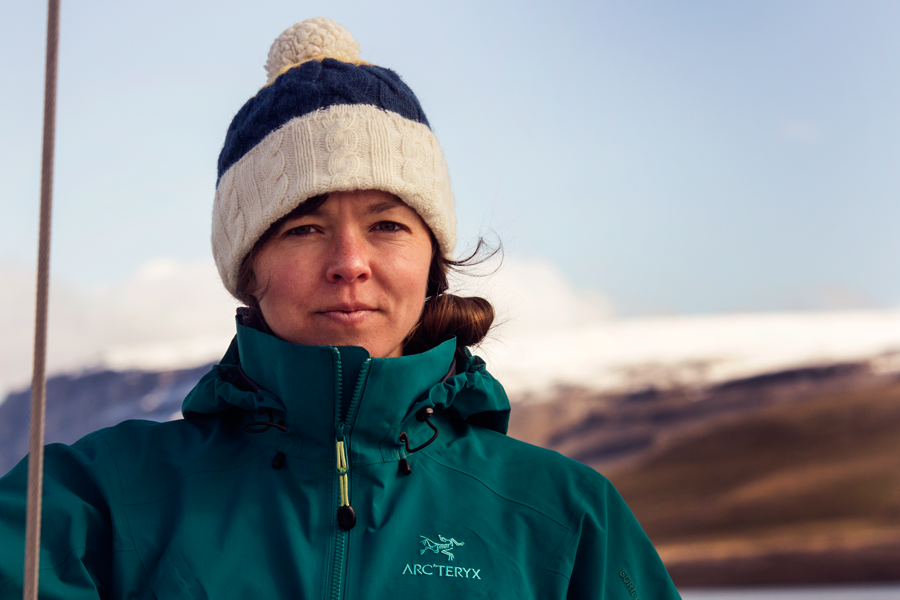
I started in Churchill, Manitoba as a kayak guide. I was traveling overseas with a friend of mine through South and Eastern Africa, and I was guiding to earn some money along the way. While I was there, my dad told me there were some kayaks for sale in Churchill. When I came back, I thought, “I'm good at guiding, I could just run a business too, why not?” So, I went up to Churchill, looked at all the equipment, bought it and started a kayaking company.
 Credit: Build Films
That’s where my fascination with the North and belugas really began – spending time in the Canadian subarctic and around these incredible creatures every day.
What are some of your sources of inspiration?
Early in my career, I worked with Jack Orr, who has since passed away. He was field technician at Fisheries and Oceans Canada and really took me under his wing. He brought me into big field camps in the High Arctic, showed me how to work with communities and how to be a good researcher in the field. That was a big step for me.
In simple terms, how would you describe the problems that you and your colleagues are trying to solve at the moment?
I’m the vice president of Science at Oceans North, and I have a marine biology background. I've slowly transitioned into more project management side of things, but I'm still in the field with my colleagues. One of the main issues that we're working on right now is having to work in a space where development is progressing alongside conservation work. So, how do we balance economic opportunities and growth in Canada alongside marine conservation? Those two things need to go hand-in-hand, and we need to figure out how to work in that space so that both can thrive.
What is a typical day in the field like?
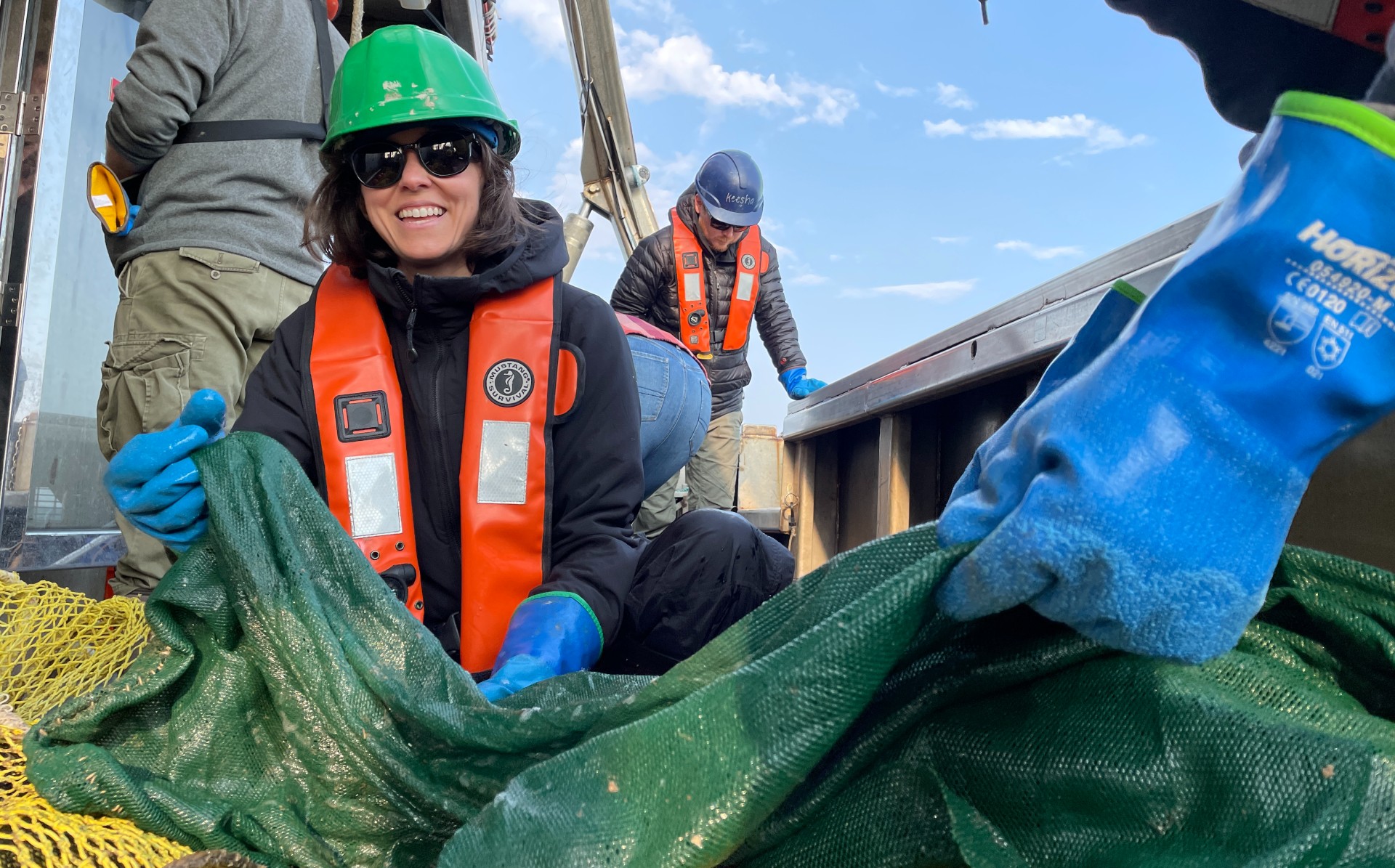
My colleagues and I first started our acoustic monitoring program off the coast of North Baffin Island in 2014. Our underwater noise monitoring deployments are either through the ice or in the open water, and generally we’re getting most of the equipment prepared on land in advance before heading out in a boat on the water. There's a mooring system and the endless amounts of line that go with this equipment. We’re testing the equipment in the boat and making sure everything's ready before we're prepared to get it all in the water.
 Credit: Build Films
Those deployments and field seasons can range from short to long. For example, we have a team that went on an expedition in Hudson Strait and Fox Basin for 10 days, deploying and retrieving four hydrophones – that was a bit of a longer process.
I love arriving in the communities when we're preparing for a field program. I love the vibe at the airport, seeing what's happening down by the water in the community, and then also just getting out on the water, or on the land, and being surrounded by a completely different environment. It is incredibly quiet compared to most of the places in Southern Canada.
Obviously, I love the wildlife, too. It's incredible to be out on the water and see nothing, see nothing, and then suddenly you're surrounded by whales or seals popping up left and right. It's pretty spectacular.
What is your favorite animal to study and what’s something interesting about it?
Narwhal. Full stop. Easy answer.
I did my master's research on narwhal movement and diving patterns, so that was my first introduction to working around them. The acoustic monitoring program really focuses on them, so I’m still spending a lot of time around narwhals, listening to and thinking about them.
One of the most interesting things about narwhals is that the tusk always spirals counterclockwise. You think there must always be exceptions in nature – there's always some animal that has an extra eye, or just something different that's happened. I've asked many hunters and no one has said to me that they have seen one spiraling the other way.
We touched on working with local communities. Can you talk about co-production of knowledge and how that influences your work?
 Credit: Isabelle Groc
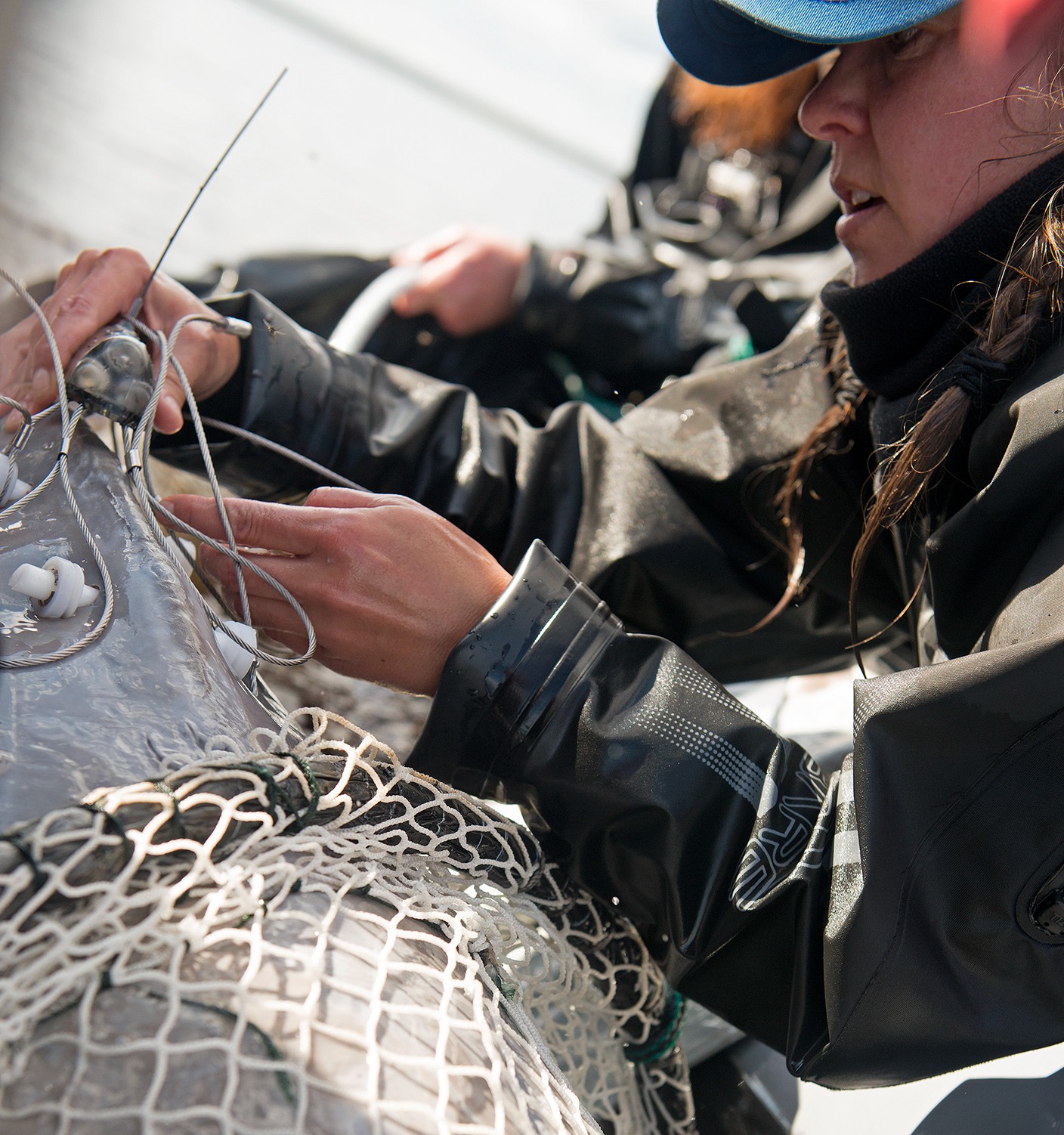
We only work in communities that are interested in working with us, so many of the programs and research projects that we have come from the community identifying a need and asking a question. For example, the acoustic research program in North Baffin came from a concern by the hunters about increasing vessels in the area and what that increased vessel traffic was doing to the marine life.
Not only do the questions come from the community, but when we're trying to design the research program, we need to figure out questions such as, where would the hydrophone go? Why is it going there? What kind of environment are we placing it in? We need a bunch of information to get the system up and running, and that's all done in collaboration with the community and the local Hunters and Trappers Organization. As the programs move along and develop, they keep getting refined and changed according to what the community is looking for and what questions they have based on the data coming back.
What kind of advice do you give to students or young researchers?
If it's older kids, like high school students, I often tell them that there isn't necessarily a direct path to a marine biology or conservation career. You don't have to just go straight into undergrad, then into a master's and into a Ph.D. The people that I work with often have much more interesting paths. The connections you make along the way really guide the work that you do in the end and open the doors. So just be a little bit more flexible with your career path.
When I visit with elementary school kids, I just want them to be excited and interested. I enjoy showing them something like a piece of narwhal tusk or art that's made from a seal skin, so they can smell it, touch it, listen to what those animals sound like, and just get curious about nature that's not right outside their back door. You ask kids what their favorite animal is when they're six years old and they might say dog or cat, but then you ask my kids and they say walrus! There's so much more out there than most people realize, but a lot of people will never see it, and I think that it's very difficult to care about things that we can't see.
That is one reason why it's really important to talk to young kids about these things, and it’s also why we have a real focus on underwater sound right now at Oceans North. I’ve been working on that campaign since I did a TED talk on it about 15 years ago – the idea that it's very hard to get your head around underwater sound because we can't see it, so people think about plastic pollution more readily than they do underwater sound pollution.
Where would you like to see yourself or your work roughly five years from now?
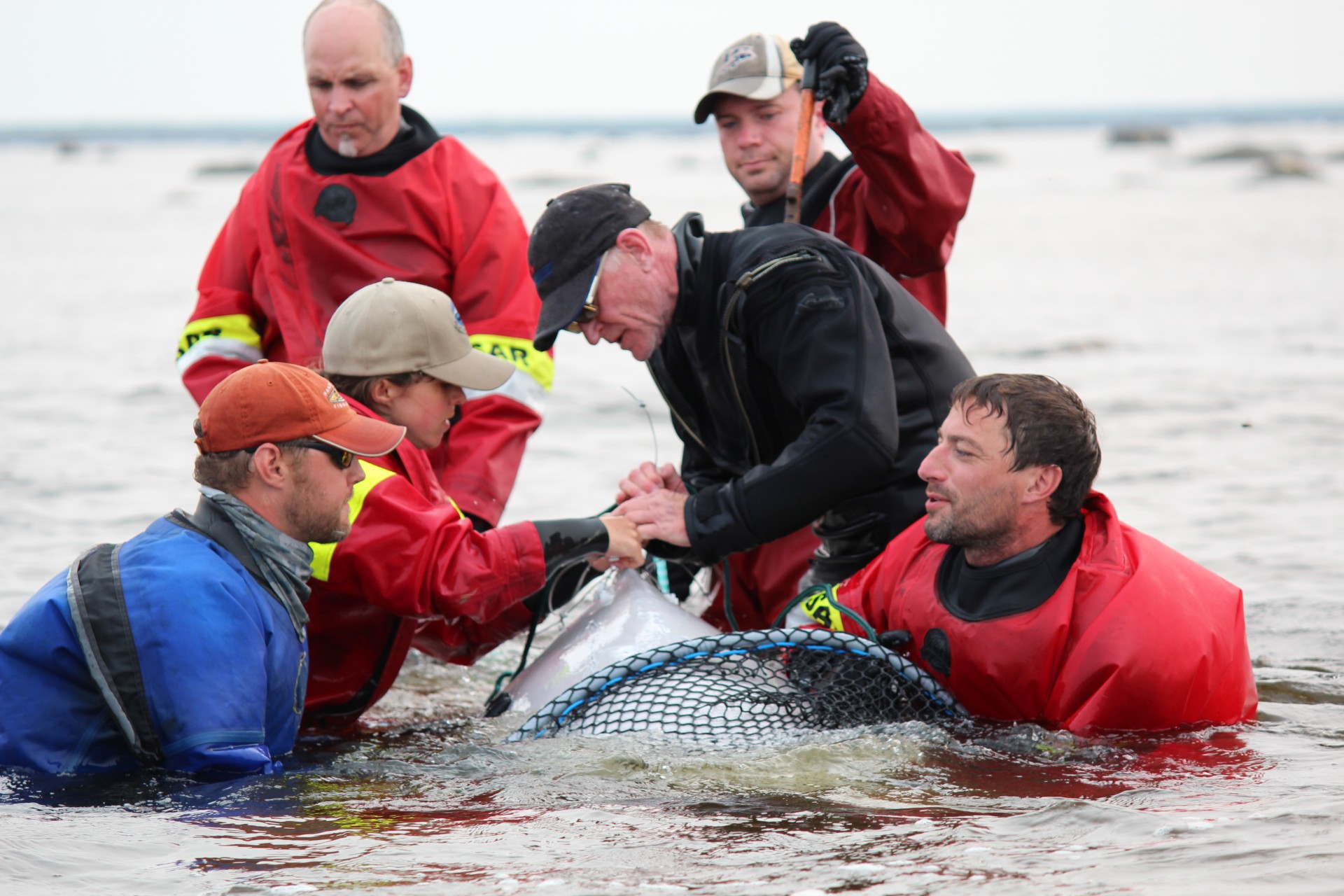
I would like to see some of our research programs expand. It's taken a long time to get some of these programs off the ground, which makes sense when you're working with communities. You need to go at the pace at which communities operate, and not faster. Now, we have this incredible network of research programs. I would like to see them offered to communities that have expressed interest in the Western Arctic and the west side of Greenland.
 Credit: Oceans North
We work incredibly well with communities at this point, and in five years, I want to see an even closer relationship with the people and places where we work. That means we’re working together to direct the flow of information and research alongside the local Hunters and Trappers Organization, and we're working together towards a common goal.
In terms of economic growth versus environmental sustainability, things are going to be coming to a head as our federal government in Canada focuses on major projects and infrastructure. We’ll need to work very closely with local communities to support them.
What are some of your hobbies or interests when you’re not working?
We're a big skiing family – we're in North Vancouver, so we have some local hills, and then Whistler is only about an hour and 20 minutes away. We spend our time between our local hill, Mount Seymour, and Whistler, skiing through the winter. That’s one of my biggest passions right now.
I have two little kids, and they made the ski team at our local hill. We went to what we thought was supposed to be an information session on joining the ski team, but it was actually tryouts. My kids had never seen a ski gate in their life, but I said just go for, just wing it, and they did it! We’re so proud of them for always going for it.
Is there anything else you’d like to share?
It's a lot easier to protect something when it's in pristine or good shape than it is to wait until there's significant and established industrial activity, or until we've got a crisis situation we need to manage. We have a real opportunity, especially in the Canadian Arctic, to get things right the first time. We have industry at the doorstep in a lot of places and a lot of interest in driving the economy forward, and we just need to make sure we have our ducks in a row so that we're not clawing back and trying to figure out how to fix things after it’s too late.
We have examples, but for some reason, we often have a hard time learning from history. We can see what happened on the west coast with orcas and the steps they're trying to put in place to protect them now. We can see what happened to the belugas in the St. Lawrence and in Cook Inlet, and so we need to use those examples and ask: how do we need to make sure this doesn't happen in the Canadian Arctic going forward? How can we have thriving communities that are part of a thriving and resilient Arctic ecosystem?

Message sent
Thank you for sharing.